
CRM & Sales
Cold Lead Automation That Converts: Proven Email & SMS Strategies to Reignite Sales
October 15, 2025
You spent $800 on Facebook ads last month. Got 52 leads. Called back maybe 15 of them. Followed up with 8. The rest? Sitting in a spreadsheet somewhere, getting colder by the day.
Here’s the part that stings: nearly half of all salespeople never follow up after the first contact. Not because they don’t care, but because life gets in the way. You’re running service calls, managing crews, handling emergencies. Following up with someone who said “maybe” three months ago feels like the lowest priority—until you realize how much money you’re leaving on the table.
Cold leads aren’t dead leads. They’re just leads you haven’t talked to in a while. And with the right approach, a good chunk of them will turn into paying customers. You just need a system that does the heavy lifting for you.
That’s where automation comes in.
Why Leads Go Cold (And Why It’s Not Too Late)
Let’s be honest about what usually happens. Someone requests a quote. You send it over. They say they’ll think about it. You get busy with three emergency calls. A week passes. Now it feels awkward to reach out. So you don’t.
Or maybe you do follow up once. They don’t respond. You figure they went with someone else. But here’s what actually happened: 60% of customers say “no” four times before they say “yes.” They weren’t rejecting you—the timing just wasn’t right.
Leads go cold for a few simple reasons:
Bad timing. They got your quote right before their kid’s wedding, a family emergency, or the holidays. Life happened. It wasn’t about your price or service.
They forgot. You were one of five contractors they called. Everyone blurred together. The guy who stayed in touch? He’s the one they remember.
They’re not ready yet. That bathroom remodel can wait until tax refund season. The roof repair can hold until spring. They will need you—just not today.
You followed up once and stopped. One phone call or one email isn’t enough. Most people need 5-7 touchpoints before they’re ready to commit.
The good news? None of these reasons mean they’ll never hire you. They just mean you need to stay on their radar without it taking over your day. That’s the whole point of automation.
The 3 Types of Cold Leads (And Which Ones to Chase First)
Not every cold lead deserves the same attention. Some are worth more of your time than others. Here’s how to sort them:
| Lead Type | How Long They’ve Been Cold | Priority Level | Best Automation Approach |
|---|---|---|---|
| Hot-Turned-Cold | 1-2 weeks since last contact | HIGH | Immediate re-engagement. They were interested recently—something interrupted the conversation. |
| Warm-Turned-Cold | 1-3 months since last contact | MEDIUM | Value-first approach. Remind them why they reached out, offer helpful info (not just another sales pitch). |
| Never Responded | 3+ months or never engaged | LOW | Long-game nurture. Stay on radar with occasional helpful content. Some will eventually need you. |
The mistake most people make? Treating all cold leads the same. You send the same “Hey, just checking in!” message to everyone, and nobody responds because it’s generic and forgettable.
Instead, match your message to where they are. Someone who requested a quote two weeks ago needs a different approach than someone who downloaded a coupon six months ago and never called.
Your 30-Day Reactivation Game Plan
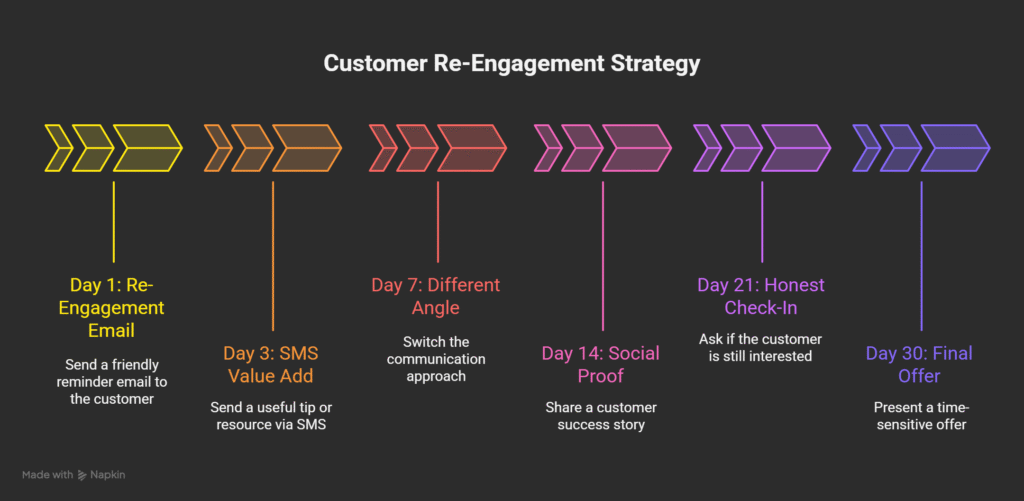
Here’s a simple system that brings cold leads back without you lifting a finger after the initial setup. Think of this as your “set it and forget it” follow-up system.
The Basic Structure:
Day 1: The Re-Engagement
Send a friendly, no-pressure message that reminds them who you are and why they reached out. Keep it short. Make it about them, not you.
Day 3: The Value Add
If they opened your first message but didn’t reply, send something useful. A quick tip related to their project, a seasonal reminder, or a helpful resource. Show you’re not just chasing a sale.
Day 7: The Different Angle
Switch up your approach. If you emailed before, try a text. If you talked about price, talk about results. People respond to different things at different times.
Day 14: The Social Proof
Share a quick story about a similar customer. “Just finished a kitchen remodel for a family in your area—here’s what they said.” Real results matter more than sales pitches.
Day 21: The Honest Check-In
Ask directly: “Are you still thinking about this project, or should I check back in a few months?” Give them an easy out. Ironically, giving people permission to say no often gets them to say yes.
Day 30: The Final Offer
One last message with a time-sensitive reason to act. A seasonal discount, a scheduling opening, or a limited-time offer. Not pushy—just a genuine “last call” before you move on.
What Happens When They Engage:
Here’s where automation gets smart. If someone opens your email but doesn’t reply, they get a different follow-up than someone who doesn’t open it at all. If they click a link, that triggers another sequence. If they respond, the automation stops and you have a real conversation.
Most automation tools let you set these triggers up in about 10 minutes. Once it’s running, your cold leads get consistent, personalized follow-ups without you doing anything manually.
5 Messages That Get Responses
Forget the templates that sound like they came from a corporate marketing department. These messages work because they sound like a real person wrote them—because they should.
Message #1: The Friendly Reminder (Email)
When to use it: First contact with a hot-turned-cold lead (1-2 weeks)
Example:
Subject: Still thinking about your bathroom remodel?
Hi [Name],
I sent over that quote a couple weeks ago and wanted to make sure it didn’t get buried in your inbox. I know how it goes—life gets busy.
If you’re still thinking about it, I’m happy to answer any questions. If now’s not the right time, no problem. Just let me know when I should check back in.
[Your Name]
Why it works: No pressure. Acknowledges they’re busy. Gives them an easy way to respond or defer.
Message #2: The Quick Tip (SMS)
When to use it: Day 3-5 follow-up if they haven’t responded to email
Example:
Hey [Name], quick tip: If you’re planning that deck project, fall is actually the best time to build. Better pricing on materials and contractors are less booked. Want to chat about timing?
Why it works: Leads with value, not a sales pitch. Shows expertise. Texts have a 98% open rate within 3 minutes—they’ll see it.
Message #3: The Different Angle (Email)
When to use it: Day 7-10, when you need to try a new approach
Example:
Subject: What happens if you wait?
Hi [Name],
I’ve been doing this for 12 years, and one thing I’ve noticed: small problems turn into expensive ones when you wait.
That roof leak you called about? In 6 months, we’re usually looking at water damage, insulation replacement, and sometimes mold remediation. A $2,500 fix turns into $8,000.
Not trying to scare you—just want you to have the info. Let me know if you want to take another look at that quote.
[Your Name]
Why it works: Changes the conversation from cost to consequence. Helps them see the real risk of delaying.
Message #4: The Social Proof (Email & SMS)
When to use it: Day 14-18, when they need reassurance
Example:
Subject: How the Johnsons’ kitchen turned out
Hi [Name],
Just wrapped up a kitchen remodel in [nearby area] and thought of you since you were looking at something similar.
They were worried about the timeline, but we finished in 3 weeks with zero surprise costs. Here’s what they said: [short quote or link to review].
If you want to see photos or talk about your project, let me know.
[Your Name]
Why it works: Real proof matters. It’s not you bragging—it’s a customer vouching for you. Works especially well when the project is similar to theirs.
Message #5: The Honest Last Call (Email)
When to use it: Day 28-30, final attempt
Example:
Subject: Last check before I close your file
Hi [Name],
I’ve reached out a few times about your [project type] and haven’t heard back—totally fine if the timing isn’t right.
Before I close out your file, I wanted to give you one more chance to grab that quote. We have an opening the week of [date] if you want to get it done before [seasonal reason].
If I don’t hear from you, I’ll assume you went a different direction or decided to hold off. Either way, no hard feelings.
[Your Name]
Why it works: The honesty is refreshing. “Closing your file” creates mild urgency without being pushy. Many people respond just to keep their options open.
Quick Template Tips:
- Use their name. Always. Feels personal even when automated.
- Keep it short. Three paragraphs max for email. One or two sentences for SMS.
- One clear next step. Don’t give them five options. Ask one question or suggest one action.
- Sound like yourself. If you wouldn’t say it in person, don’t write it in a message.
Tracking What Works (Without Overthinking It)
You don’t need a fancy dashboard to know if your follow-ups are working. Just track three simple numbers:
1. Open Rate
How many people opened your email? If it’s below 20%, your subject line needs work. If it’s above 30%, you’re doing great.
2. Response Rate
How many people replied or took action? Even 5-10% is solid for cold leads. If you’re getting zero responses after 20+ messages, your content needs to change.
3. Reactivation Rate
How many cold leads turned into appointments or jobs? If you’re bringing back even 15-20% of old leads, that’s revenue you wouldn’t have had otherwise.
Simple Automation Health Check:
Run through this every month:
- Are people opening your messages? (Check subject lines if not)
- Are people responding? (Test different message styles)
- Are conversations turning into jobs? (If not, maybe your pricing or service needs adjustment)
- Are you getting unsubscribes or complaints? (Pull back on frequency)
Most automation tools show you all of this in a simple report. Spend 10 minutes a month reviewing it, make one small tweak, and move on. You’re not trying to be a marketing expert—you’re trying to stay in front of people who already showed interest.
Putting It All on Autopilot
Here’s the thing: reactivating cold leads is just step one. You also need to schedule those jobs, dispatch your team, collect payments, and keep everything organized.
That’s where the right tools make all the difference.
LeadProspecting.ai handles the front end—automated follow-ups, appointment scheduling, and keeping leads engaged until they’re ready to buy. It’s built for service businesses like yours, so you’re not wrestling with complicated software made for tech companies.
And because they partner with FieldServ AI, you get the complete system. LeadProspecting.ai brings the leads back to life. FieldServ AI helps you manage the jobs, dispatch technicians, and get paid faster. Together, they handle everything from your first follow-up message to your final invoice.
You don’t need to figure this out alone. Both platforms are designed to work together and grow with your business—whether you’re a one-person operation or managing a full crew.
Ready to stop losing track of leads? Start automating your follow-ups and get back to the work you actually enjoy. Learn more about LeadProspecting Ai or Check out FieldServ Ai for job management.
Frequently Asked Questions
What is cold lead automation and how does it work?
Cold lead automation sends follow-up messages to people who haven’t responded in a while—without you having to remember or do it manually. You set up a sequence once, and it runs automatically based on how people engage (or don’t engage) with your messages.
How long should I wait before automating follow-ups for cold leads?
If someone hasn’t responded in 5-7 days, they’re a good candidate for automation. Don’t wait too long—leads get colder the longer you wait, and other contractors are probably staying in touch.
Can I use automation without sounding robotic?
Absolutely. The key is writing messages that sound like you. Use your own voice, keep it conversational, and personalize with their name and project details. Automation just handles the sending and timing—you control what it says.
What’s the best CRM automation for small businesses?
Look for something built specifically for service businesses, not generic marketing platforms. You want tools that handle scheduling, payments, and follow-ups in one place—not just email blasts. Simple, affordable, and easy to set up should be your priorities.
How do AI tools help with lead generation and re-engagement?
AI tools can track when someone opens an email, clicks a link, or ignores a message—then automatically adjust what happens next. They can also suggest the best times to send messages and which leads are most likely to respond, so you’re not wasting time on dead ends.
Are SMS follow-ups better than email for cold leads?
They’re different, not better. Texts get opened faster (usually within 3 minutes), but you can’t send long explanations. Email lets you share more detail and links. The best approach? Use both. Send an email first, follow up with a text if they don’t open it.
How do I measure success from cold lead automation campaigns?
Track three things: how many people open your messages, how many respond, and how many turn into actual jobs. If 15-20% of your cold leads book an appointment, you’re doing well. Anything above that is excellent.
What’s the best way to re-engage cold leads in Twin Falls?
Same strategy as anywhere else—stay consistent, offer value, and don’t give up after one attempt. In smaller markets like Twin Falls, reputation matters even more. People talk, so make sure your follow-ups are helpful and never pushy. Word gets around fast.
Which automation tools are popular among small businesses in the Magic Valley?
Service businesses in Idaho tend to prefer simple, affordable platforms that don’t require a tech degree to operate. Look for tools that integrate scheduling, payments, and follow-ups—things that handle the unique needs of contractors, plumbers, and HVAC companies.
How can I use LeadProspecting.ai to manage both cold and warm leads efficiently?
Set up different automation sequences based on lead temperature. Hot leads get immediate, personal attention. Warm leads get value-driven follow-ups. Cold leads get longer nurture sequences. The platform lets you organize everyone by stage and automatically moves them through the right messages until they’re ready to book.